
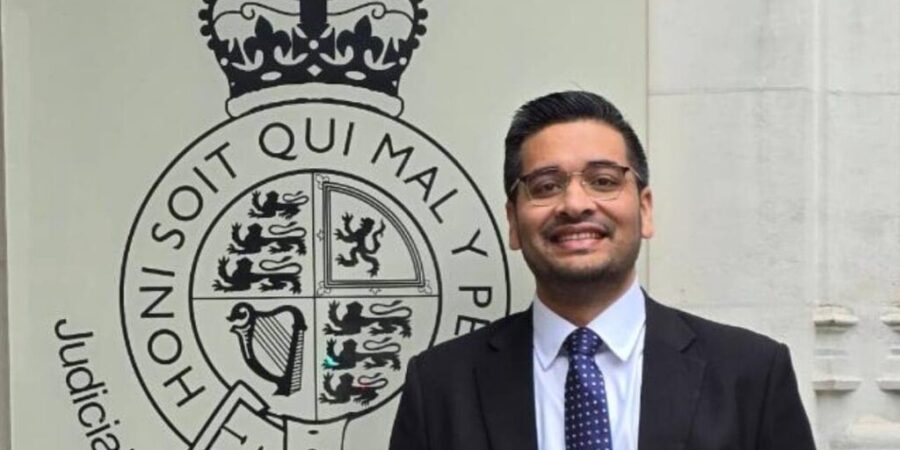
THE Court of Appeal has quashed the conviction against the 17-year-old son of a judge who was found guilty of using the Priority Bus Route (PBR) without authorisation, after he was stopped while driving his father’s vehicle.
The ruling clarifies the use of the PBR for permit holders.
The three-judge panel ruled that the Master erred in law when she required the teen to produce a letter of authorisation that was neither mandated by legislation nor entered into evidence.
The court held that the Highways Act and the Classification of Highways Order authorise vehicles, not specific drivers, to use the PBR, and that the teen had discharged his legal burden by producing his father’s valid PBR permit, and asserting he had permission to drive the vehicle.
The onus then shifted to prosecutors to prove otherwise, the judges said, but the state failed to do so.
According to the unanimous judgment, delivered by Justices of Appeal Peter Rajkumar, Geoffrey Henderson and Ricky Rahim, Master Tricia Bhagwandeen-Sadho improperly relied on alleged “conditions” printed on the back of the PBR permit that were not before the court.
Prosecutors conceded that neither the permit nor its reverse-side conditions had been entered into evidence. Rajkumar, who wrote the decision, found that the teen, therefore, had no opportunity to address the supposed requirement for a letter of authorisation, rendering the conviction fundamentally flawed.
The appellate judges also rejected the Master’s conclusion that giving effect to the plain wording of the law would produce an absurd result. They noted that the legislation clearly allows the minister to impose additional conditions if desired; meaning courts may not infer restrictions that do not appear in the statute.
In allowing the appeal, the Court of Appeal set aside the conviction and all related orders, holding that the prosecution had not displaced the teen’s prima facie authorisation to use the PBR.
The teen, on August 24, 2020, was stopped on the PBR, driving his father’s vehicle. He produced the PBR permit. He was found guilty of use of the PBR by an unauthorised vehicle on the basis that he did not produce a letter of authorisation and that he had not discharged the onus on him to prove that he was authorised to drive that vehicle on the PBR.
In deciding the case, Rajkumar said the legislation only expressly refers to vehicles which are authorised to use the PBR.
“Any further restriction on drivers of such vehicles would need to have been derived from additional conditions imposed by the minister in authorising their use.
“The Master erred in law in ignoring the plain grammatical and literal meaning of the statute which pertained only to vehicles which were authorised, and did not further restrict the category of authorised users of the PBR.”
He added, “There was no basis for the Master’s identification of the purported mischief or any alleged absurdity that the plain and literal meaning of the legislation would allegedly produce.
“The legislation permitted the use of an authorised vehicle. A PBR permit permitted the use of a vehicle on the PBR. It could not have permitted the use of more than one vehicle or more than one driver at a time.
“The statute itself provided on its plain and literal construction the mechanism for further restricting the category of users of authorised vehicles on the PBR by empowering the Minister to stipulate additional conditions on any permission granted.
“The requirement for a letter of authorisation could not arise by its implication into the statute on any legitimate statutory construction.
“It was a requirement that could only allegedly arise on the basis of the conditions which were not in evidence before her.”
Stefan Ramkissoon represented the judge’s son while Anju Bhola represented the state.
Leave a Reply